


Send Message
Privacy statement: Your privacy is very important to Us. Our company promises not to disclose your personal information to any external company with out your explicit permission.
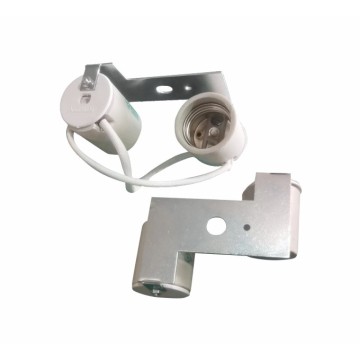


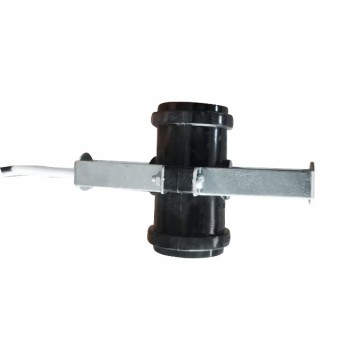
A porcelain socket is the critical connection point between your lighting fixture's wiring and the bulb. Made from high-grade ceramic materials, these sockets provide superior heat resistance and electrical insulation compared to standard plastic alternatives. For bathroom vanity lighting installations, where moisture and temperature fluctuations are common, choosing the right porcelain socket ensures long-term safety and performance.
Zhengdong Lighting Co., Ltd. has been manufacturing premium lighting fixtures since 1997, with deep expertise in selecting and sourcing reliable components like porcelain sockets that meet international safety standards including UL, CUL, CE, and ROHS certifications.
With over 25 years of experience, Zhengdong Lighting operates a 250,000 square meter facility equipped with 25 standard production lines. Our scale enables consistent quality control and competitive pricing for bulk orders of porcelain socket lighting fixtures.
We employ more than 600 production workers, including 100 professional technicians and 30 dedicated quality engineers who ensure every porcelain socket meets rigorous performance standards before shipment.
All our products carrying porcelain socket components hold UL/CUL/CE/ROHS approvals and 3C certification. We acquired ISO-9001:2008 International Quality Certificate in 2005 and implemented an ERP management system in 2011 to maintain traceability and consistency across all orders.
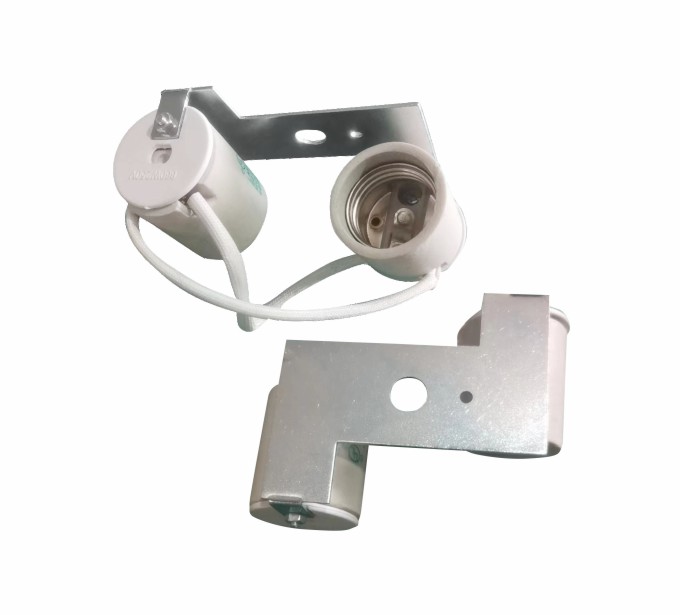
Selecting the right porcelain socket for your lighting project requires understanding several technical specifications. Here are the critical factors that impact your installation success and long-term maintenance costs.
Porcelain sockets excel in high-temperature environments, typically withstand temperatures exceeding 300°C. This makes them ideal for enclosed bathroom vanity fixtures where heat buildup occurs. Verify the socket's thermal rating matches your bulb wattage requirements to prevent premature failure.
The dielectric strength of porcelain provides excellent electrical isolation, reducing short-circuit risks in humid bathroom environments. Look for sockets with certified insulation ratings that comply with UL or CE standards for your target market.
Ensure the porcelain socket matches your bulb base type (E26, E27, G9, etc.). Standard Edison screw bases dominate residential applications, while smaller bi-pin bases serve decorative fixtures. Confirm compatibility before placing bulk orders.
For bathroom installations, select porcelain sockets with sealed contacts and corrosion-resistant terminal connections. Our fixtures incorporate protective measures that extend socket lifespan even in high-humidity conditions typical of bathrooms and coastal regions.
Use this checklist to evaluate suppliers and ensure your porcelain socket lighting order meets all technical and compliance requirements before committing to purchase.
Confirm the supplier provides valid certification documents for porcelain sockets used in your target market.
Ensure thermal resistance exceeds your application's maximum operating temperature by at least 20%.
Match socket base type with your intended bulb selection to avoid field failures and returns.
For bathroom use, verify sealing standards and contact protection against humidity and condensation.
Choose manufacturers with established production lines and quality engineering teams for consistent supply.
Always test samples in your actual fixture design before approving full production runs.
Procurement buyers often encounter recurring issues when sourcing porcelain socket fixtures. Understanding these challenges helps you specify the right products and prevent costly field failures.
Porcelain can crack under rapid temperature changes or excessive heat. Mitigate this risk by specifying sockets with proper thermal ratings and avoiding oversized bulbs in enclosed fixtures. Ensure adequate ventilation in your fixture design to dissipate heat effectively.
Humid bathroom environments accelerate corrosion on metal terminals, leading to intermittent connections and flickering lights. Specify sockets with gold-plated or nickel-plated contacts and sealed terminal designs to maintain reliable conductivity over time.
Mismatched socket bases cause installation difficulties and unsafe bulb connections. Always verify exact dimensions against your bulb specifications and request dimensional drawings from your supplier before ordering.
Low-quality porcelain may not provide adequate electrical insulation, creating shock hazards. Require suppliers to provide dielectric test reports confirming compliance with UL 499 or equivalent standards for lighting device parts.
When evaluating potential suppliers for porcelain socket lighting products, consider these essential criteria to ensure you partner with a manufacturer capable of delivering consistent quality and reliable service.
Look for suppliers with at least 15-20 years of industry experience and verifiable production capacity. Established manufacturers like Zhengdong Lighting, operating since 1997 with 25 production lines, demonstrate stability and process maturity that newer facilities cannot match.
Verify that your supplier holds relevant product certifications (UL, CE, ROHS) and quality management certifications (ISO 9001). These credentials indicate adherence to international standards and reduce your compliance risk when importing lighting fixtures.
Prioritize manufacturers employing specialized quality engineers rather than relying solely on general production staff. A ratio of quality personnel to production workers above 5%, as seen at Zhengdong Lighting with 30 quality engineers for 600+ workers, signals serious commitment to defect prevention.
Suppliers combining design, R&D, and manufacturing capabilities offer better customization options and faster problem resolution. This integrated approach reduces communication gaps and ensures porcelain socket specifications align precisely with your fixture requirements.
Porcelain sockets offer significantly higher heat resistance (typically 300°C+) compared to plastic alternatives (usually limited to 105-150°C). In bathroom vanity applications where enclosed fixtures trap heat, porcelain prevents thermal degradation and extends bulb life. Porcelain also provides superior electrical insulation properties, reducing shock risks in humid environments.
Yes, porcelain sockets work perfectly with LED bulbs. While LEDs generate less heat than incandescent bulbs, porcelain sockets still provide excellent electrical insulation and durability. Many premium LED bathroom vanity fixtures continue using porcelain sockets due to their longevity and fire-resistant properties, ensuring compatibility with both traditional and modern bulb technologies.
Request sample units for laboratory testing, focusing on dielectric strength measurements, thermal cycling tests, and corrosion resistance checks. Ask for certification documentation (UL, CE, ROHS) and third-party test reports. Visit the supplier's facility if possible to observe quality control processes. Reputable manufacturers like Zhengdong Lighting employ dedicated quality engineers and maintain ISO certification, providing additional assurance of consistent product standards.
MOQs vary by supplier but typically range from 500 to 2,000 units for custom configurations. Larger manufacturers with established production lines, such as those with 25+ lines like Zhengdong Lighting, may offer more flexible MOQs due to operational efficiency. Standard socket configurations usually have lower MOQs than custom-designed variants requiring new tooling or material sourcing.
Porcelain sockets can be used outdoors when paired with properly sealed fixture housings that protect against direct water exposure and UV radiation. The inherent weather resistance of porcelain makes it suitable for covered porches, pergolas, and garden lighting. However, always verify the complete fixture's IP rating and ensure terminal connections remain protected from moisture ingress for reliable outdoor performance.
Standard production lead times typically range from 25 to 45 days depending on order volume and configuration complexity. Manufacturers with robust systems like ERP implementation (as Zhengdong Lighting adopted in 2011) can provide more accurate scheduling and faster turnaround. Factor in additional time for sample approval, shipping, and customs clearance when planning your inventory replenishment cycle.
Tel: +86-0757-86441006
Whatsapp: +86 13928657116
Address: Wangzhi Lang, Lutang Road, Luocun, Nanhai, Foshan, Guangdong China
Privacy statement: Your privacy is very important to Us. Our company promises not to disclose your personal information to any external company with out your explicit permission.
Fill in more information so that we can get in touch with you faster
Privacy statement: Your privacy is very important to Us. Our company promises not to disclose your personal information to any external company with out your explicit permission.