

Send Message
Privacy statement: Your privacy is very important to Us. Our company promises not to disclose your personal information to any external company with out your explicit permission.
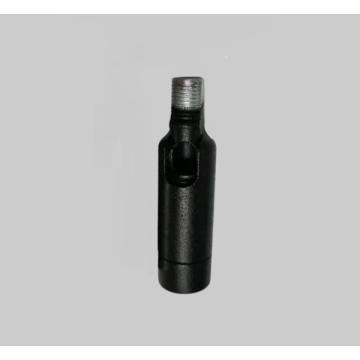
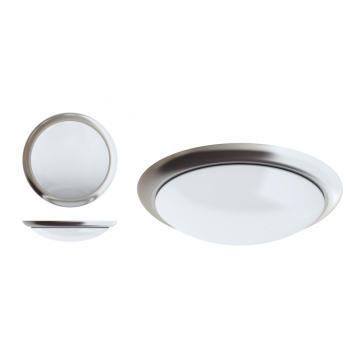
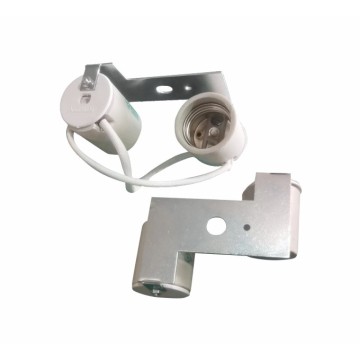


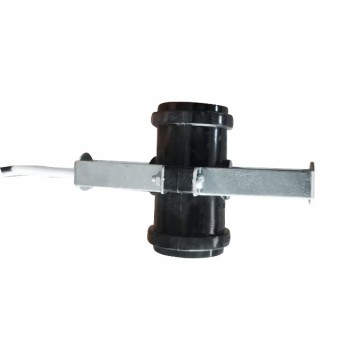
A lampholder lamp socket is the critical interface component that connects your light bulb to the electrical supply while providing mechanical support and safety insulation. Think of it as the bridge between your lighting fixture and the power source — if this component fails, your entire lighting system fails.
For procurement professionals sourcing lighting fixtures globally, understanding lampholder specifications is essential. The wrong socket type can cause overheating, poor connections, or even fire hazards. Different applications require different socket standards: E26/E27 for general household use, GU10 for directional spotlights, G9 for decorative pendants, and B22 for regions with bayonet preferences.
Zhengdong Lighting Co., Ltd. has been manufacturing premium lampholder lamp sockets since 1997, combining decades of expertise in materials science and electrical engineering to deliver components that meet international safety certifications including UL, CUL, CE, and ROHS standards.
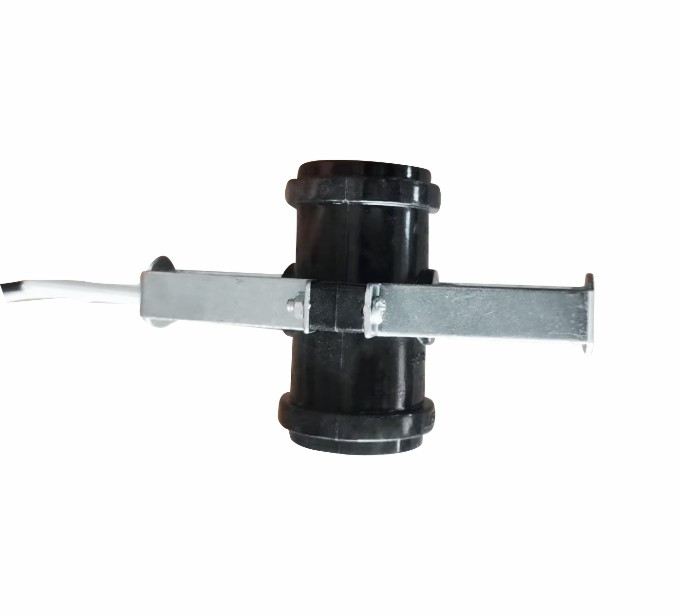

Our 250,000 square meter facility in Foshan, Guangdong houses 25 standard production lines dedicated to lighting fixture components, including lampholder lamp sockets. This scale ensures we can fulfill large-volume orders while maintaining consistent quality across every batch.
Since acquiring ISO-9001:2008 certification in 2005, we have built our quality management systems around zero-defect manufacturing principles. Every lampholder undergoes rigorous testing before shipment, ensuring your procurement team receives products that meet exact specifications without costly returns or delays.
With over 30 quality engineers on staff and an ERP system implemented since 2011 for process standardization, we provide full traceability from raw material sourcing to final product delivery — giving you complete confidence in every order.
All lampholder lamp sockets carry verified certifications including UL, CUL, CE, ROHS, and 3C marks. These approvals open doors to global markets and eliminate compliance risks for your buyers.
25 production lines and 600+ employees mean we handle volume orders without compromising quality. Your supply chain stays stable even during peak demand seasons.
Imported overseas equipment combined with 30 professional designers and 100 skilled workmen ensures continuous innovation in lampholder design and performance optimization.
Selecting the correct lampholder lamp socket requires balancing technical specifications with application requirements. Here is your practical guide to making the right choice:
E-series (E26, E27, E12): Edison screw bases dominate North America and Europe for general-purpose lighting. They offer reliable grip and easy installation. Best for table lamps, ceiling fixtures, and pendant lights.
GU-series (GU10, G4, G5.3): Pin-based halogen and LED modules used in track lighting and recessed downlights. GU10 provides twist-lock security ideal for adjustable spotlights.
B22 Bayonet: Common in UK and Commonwealth countries. Quick-lock mechanism prevents loosening from vibration — perfect for automotive and industrial applications.
Always select a lampholder rated above your maximum expected load. A 250W-rated socket handling 150W bulbs runs cooler and lasts longer than one operating at its limit. For LED retrofits, remember that while LEDs draw less power, the socket must still accommodate the fixture's total electrical load.
Pro tip: Specify sockets with a 20-30% safety margin above your calculated wattage to extend service life and reduce warranty claims.
High-temperature resistant materials like PBT, PA66, or ceramic are essential for enclosed fixtures and high-wattage applications. Standard phenolic resin works for open-air fixtures but may degrade in heat-trapped environments. Material choice directly impacts your fixture's UL listing status.
Panel-mount, wire-lead, PCB-mount, and quick-connect options each serve different assembly workflows. Panel-mount sockets streamline fixture assembly but require precise cutouts. Wire-lead versions offer flexibility but add labor time. Match the mounting style to your production efficiency goals.
Before placing your next lampholder lamp socket order, run through this checklist to ensure you are getting the best value and avoiding common procurement pitfalls:
Certification Verification: Confirm all required certifications (UL, CE, ROHS, 3C) are current and applicable to your target market.
Material Safety Data: Request MSDS documentation to verify flame-retardant ratings and temperature tolerance specs.
Sample Testing: Always request physical samples before bulk ordering. Test fit, thermal cycling, and contact resistance.
MOQ Flexibility: Verify minimum order quantities align with your inventory strategy. Some suppliers offer trial quantities for new product lines.
Lead Time Confirmation: Establish clear production timelines and penalty clauses for late deliveries to protect your supply chain.
After-Sales Support: Confirm warranty terms, replacement policies, and technical support availability for defect resolution.
Lampholder lamp sockets serve diverse industries, each with unique performance demands. Understanding these applications helps you specify the right component for your end product:
Table lamps, floor lamps, chandeliers, and ceiling fixtures rely on E26/E27 and decorative G9 sockets. Buyers prioritize aesthetic integration, smooth operation feel, and long-term reliability for home environments.
Track lighting, recessed downlights, and display illumination use GU10 and MR16 sockets. High cycle-life and consistent light output make these sockets critical for retail environments where appearance drives sales.
Weather-resistant lampholders with sealed contacts handle moisture exposure in garden lights, pathway markers, and facade illumination. IP-rated sockets prevent corrosion and maintain safe electrical isolation.
Guest room reading lamps, lobby statement pieces, and bathroom vanity lighting demand sockets that withstand frequent bulb changes. Twist-lock mechanisms and reinforced contacts reduce maintenance costs.
High-bay LED fixtures and emergency lighting use heavy-duty E40 and B22 sockets designed for vibration resistance and extreme temperature ranges. Durability is paramount in these demanding environments.
Dashboard indicators, instrument panel lighting, and aftermarket headlight conversions require precision G4, H7, and specialized bi-pin sockets built to automotive-grade tolerances and safety standards.
Procurement teams often encounter recurring issues with lampholder lamp sockets after deployment. Here are the most common problems and how to avoid them:
The Problem: Excessive heat at the contact point causes discoloration, melting, or fire risk. This typically occurs when the socket's wattage rating is exceeded or when contact pressure is insufficient.
The Solution: Specify sockets with adequate safety margins (20-30% above expected load). Ensure proper spring tension in the contact mechanism. Use high-temperature resistant insulating materials like PA66 or ceramic for enclosed fixtures.
The Problem: Poor contact between the bulb base and socket terminals creates intermittent connections, causing flicker and premature bulb failure. Common in low-cost sockets with imprecise tolerances.
The Solution: Source from manufacturers with tight dimensional controls and certified tooling. Request tolerance documentation for socket bore diameter and contact pin positioning. Test-fit multiple bulb types before committing to volume orders.
The Problem: Humid or corrosive environments attack exposed metal contacts, increasing resistance and creating hot spots. Silver-plated contacts offer the best protection but come at higher cost.
The Solution: Specify nickel-plated or silver-plated contact springs for humid environments. Consider sealed lampholder designs with gasketed housings for outdoor or bathroom applications. Verify plating thickness meets industry standards.
The Problem: Degraded insulation allows current leakage, posing shock hazards and potentially tripping GFCI breakers. UV exposure, chemical cleaners, and aging all contribute to insulation failure.
The Solution: Choose sockets made from UL-approved insulating compounds with proven UV stability. Avoid sockets using recycled or substandard plastics. Request dielectric strength test reports showing breakdown voltage well above operating levels.
The Problem: Poorly designed lampholders slow down fixture assembly lines, increasing labor costs per unit. Complex mounting configurations or tight clearance requirements compound this issue.
The Solution: Prioritize sockets with intuitive mounting systems — push-fit, snap-in, or pre-wired quick-connect options dramatically reduce assembly time. Discuss your production workflow with the supplier to identify the most efficient mounting configuration.
When sourcing lampholder lamp sockets from China, buyers face challenges with quality consistency, communication barriers, and supply chain reliability. Here is why Zhengdong Lighting stands out as a trusted partner:
Tracing roots to 1987 and formally established in 1997, Zhengdong Lighting brings nearly four decades of deep expertise in lighting component manufacturing. This longevity translates to refined processes, fewer surprises, and predictable quality on every order.
Unlike trading companies, we control design, R&D, manufacturing, and sales under one roof. This integration eliminates middleman markups, accelerates problem resolution, and gives you direct access to engineering support throughout your procurement journey.
ISO-9001:2008, UL, CUL, CE, ROHS, and 3C certifications cover virtually every major market requirement. One supplier, one set of documents, simplified compliance management for your global distribution network.
Our ERP system, operational since 2011, provides real-time visibility into order status, production schedules, and inventory levels. You get accurate lead times, proactive communication, and data-driven decision support for your procurement planning.
Contact our team today for customized quotes, free samples, and technical consultation on lampholder lamp socket solutions tailored to your specific application requirements.
Get answers to the most common questions procurement professionals ask about lampholder lamp sockets before placing orders:
E26 (Edison 26mm) is the standard screw base in North America and parts of South America, while E27 (Edison 27mm) dominates Europe, Asia, and most other regions. The 1mm diameter difference means they are not interchangeable. Using the wrong base type can damage the socket or create unsafe electrical connections. Always verify your target market's standard before specifying.
Yes, any standard lampholder lamp socket works with LED bulbs since LEDs draw significantly less power than traditional incandescent or halogen bulbs. However, ensure the socket's voltage rating matches your LED driver output. For dimmable LED setups, verify the socket supports the dimmer switch type you plan to use to avoid compatibility issues.
Key certifications include UL and CUL for North America, CE for Europe, ROHS for environmental compliance, and 3C for China domestic sales. Australia requires SAA approval, Japan needs PSE marking, and Canada may require CSA certification alongside UL. Our portfolio covers UL, CUL, CE, ROHS, and 3C — consult us for market-specific guidance on additional requirements.
Calculate the maximum wattage your fixture will ever use, then select a socket rated at least 20-30% higher. For example, if your fixture uses a 60W bulb, choose a 75W or 100W-rated socket. This margin reduces operating temperature, extends socket life, and prevents thermal degradation of insulating materials. Always check the fixture manufacturer's recommended maximum wattage as well.
Standard lampholder lamp socket orders typically ship within 15-25 business days depending on volume and specification complexity. Our 25 production lines and 250,000 sqm facility enable rapid scaling for large orders. Expedited production is available for urgent requirements — discuss your timeline with our sales team for a customized schedule.
Yes. With 30 professional designers and integrated R&D capabilities, we support full OEM and ODM services. Whether you need custom colors, branded markings, unique mounting configurations, or specialized electrical ratings, our engineering team works directly with your specifications to develop solutions that integrate seamlessly into your fixture designs.
Tel: +86-0757-86441006
Whatsapp: +86 13928657116
Address: Wangzhi Lang, Lutang Road, Luocun, Nanhai, Foshan, Guangdong China
Privacy statement: Your privacy is very important to Us. Our company promises not to disclose your personal information to any external company with out your explicit permission.
Fill in more information so that we can get in touch with you faster
Privacy statement: Your privacy is very important to Us. Our company promises not to disclose your personal information to any external company with out your explicit permission.