


Send Message
Privacy statement: Your privacy is very important to Us. Our company promises not to disclose your personal information to any external company with out your explicit permission.


Indoor wall sconces are specialized lighting fixtures designed to be mounted directly onto walls, providing both functional illumination and aesthetic enhancement for interior spaces. Unlike overhead lighting that can create harsh shadows, wall sconces offer layered lighting solutions that reduce eye strain and create a warm, inviting atmosphere in homes and commercial environments.
These versatile fixtures serve multiple purposes: they provide task lighting for reading areas, ambient light for hallways and corridors, and accent lighting to highlight artwork or architectural features. Modern indoor wall sconces have evolved from simple decorative elements to sophisticated lighting solutions that combine energy efficiency with contemporary design aesthetics.
For procurement buyers: Understanding the different types of wall sconces helps you specify the right products for your clients' needs, from bathroom vanity lighting to bedroom accent lighting, ensuring optimal functionality and visual appeal.
Zhengdong Lighting Co., Ltd. brings over two decades of manufacturing excellence to indoor wall sconce production. Established in 1997 with roots tracing back to 1987, our company has grown into a large-scale enterprise operating from a 250,000 square meter facility in Foshan, China's lighting manufacturing hub.
Our commitment to quality is evidenced by our ISO-9001:2008 International Quality Certificate obtained in 2005 and comprehensive product certifications including UL/CUL, CE, ROHS, and 3C approvals. These certifications ensure that every wall sconce meets international safety and performance standards, giving buyers confidence in product reliability and regulatory compliance.
With 25 standard production lines, over 600 production employees, and a dedicated team of 30 quality engineers, we maintain rigorous quality control throughout the manufacturing process. Our ERP system, implemented in 2011, further enhances our ability to track quality metrics and ensure consistent product standards across all orders.
Buyer benefit: Certified manufacturing processes mean reduced risk of product failures, smoother customs clearance, and compliance with international building codes for your projects.
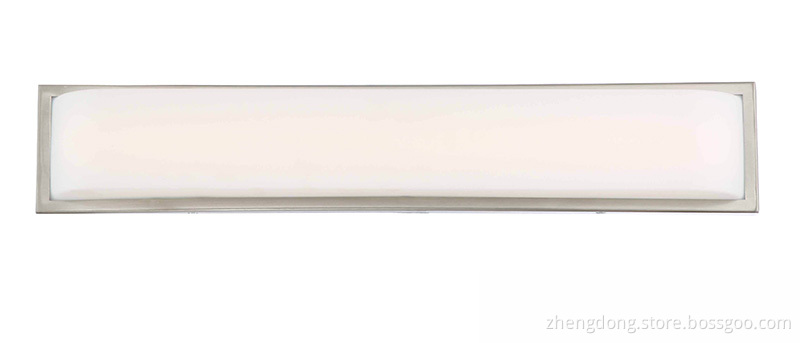
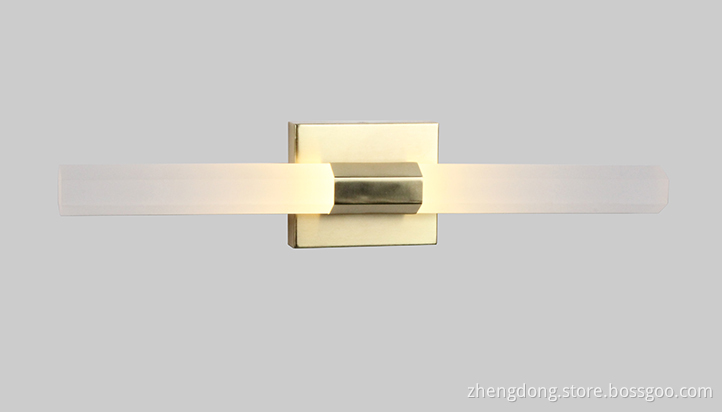
Selecting the appropriate indoor wall sconces requires careful consideration of several key factors that impact both functionality and aesthetic appeal. First, determine the primary purpose: task lighting for reading areas requires focused, adjustable illumination, while ambient lighting calls for softer, diffused light distribution.
Consider the installation environment carefully. Bathroom vanity lighting demands moisture-resistant materials and appropriate IP ratings, while bedroom sconces prioritize design flexibility and dimming capabilities. The mounting location also affects wire routing requirements and whether hardwired or plug-in options are more suitable for your project.
Material selection significantly impacts durability and maintenance requirements. Solid brass, stainless steel, and quality aluminum alloys offer long-lasting performance with minimal upkeep, while glass and crystal elements add visual interest but may require more careful handling during installation.
Light source compatibility is crucial for energy efficiency and longevity. LED-integrated wall sconces provide immediate cost savings through reduced energy consumption and longer replacement intervals compared to traditional incandescent or halogen options.
One of the most frequent issues arises when wall sconces specified for one market are shipped to another with different electrical standards. Buyers must verify that products match local voltage requirements (110V vs 220V) and frequency specifications (50Hz vs 60Hz).
Solution: Work with suppliers who offer voltage customization and request detailed technical specifications before placing orders.
Mixed batches of LED wall sconces sometimes exhibit noticeable variations in color temperature, creating an unprofessional appearance in installed projects. This issue often stems from using LEDs from different manufacturers or batches without proper quality control.
Solution: Specify tight color tolerance requirements (within 3 SDCM) and request pre-production samples for verification.
LED wall sconces may flicker, buzz, or fail to dim smoothly when paired with incompatible dimmer switches. This problem occurs when the dimmer type doesn't match the fixture's dimming technology (TRIAC, ELV, or 0-10V).
Solution: Confirm dimming compatibility specifications and recommend compatible dimmer switches to end users.
Surface finishes on metal wall sconces can vary between batches, with differences in color consistency, texture, and corrosion resistance. This inconsistency becomes particularly problematic for large projects requiring multiple orders.
Solution: Establish approved finish samples and require batch-to-batch consistency guarantees from manufacturers.
Some wall sconce designs require complex wiring configurations or special mounting hardware that contractors find difficult to install, leading to project delays and additional labor costs.
Solution: Request detailed installation guides and consider designs with simplified wiring and universal mounting systems.
Fragile wall sconce components, especially glass shades and crystal elements, can sustain damage during international shipping if packaging doesn't meet adequate protection standards.
Solution: Specify reinforced packaging requirements and conduct incoming quality inspections upon receipt.
Indoor wall sconces are essential components of residential lighting design, providing layered illumination for bedrooms, living rooms, hallways, and bathrooms. In master bedrooms, wall sconces replace traditional table lamps, freeing up nightstand space while providing reading light.
Bathroom vanity lighting requires specialized wall sconces positioned at mirror height to eliminate facial shadows and provide even illumination for grooming tasks. Moisture-resistant construction and appropriate IP ratings are critical for these applications.
Hotels and resorts rely heavily on wall sconces to create consistent branding and ambiance across guest rooms and public spaces. Durable construction, easy maintenance, and uniform appearance are paramount for high-volume hospitality projects.
Restaurant and lounge areas use wall sconces to create intimate atmospheres while providing sufficient task lighting for dining and social activities. Design flexibility allows operators to match sconces to specific themes and decor styles.
Modern office environments incorporate wall sconces for corridor lighting, conference room accent lighting, and reception area illumination. Energy-efficient LED options help companies meet sustainability goals while reducing operational costs.
Healthcare facilities require wall sconces that meet strict hygiene standards and provide glare-free illumination for patient comfort. Easy-to-clean surfaces and antimicrobial coatings are increasingly important specifications.
Retail stores use wall sconces to highlight merchandise displays, create focal points, and enhance the overall shopping experience. Adjustable beam angles and color rendering properties help showcase products effectively.
Showrooms and galleries employ wall sconces as accent lighting to draw attention to artwork and architectural features while maintaining appropriate light levels for viewing comfort.
Leading suppliers operate large-scale facilities with multiple production lines, enabling them to handle substantial order volumes while maintaining consistent quality. Look for manufacturers with 20+ production lines and established quality engineering teams.
Key indicator: Facilities exceeding 100,000 square meters with modern equipment and organized workflow demonstrate serious manufacturing capability.
Top-tier suppliers invest significantly in design teams comprising experienced professionals who understand current lighting trends and technological advancements. A strong design department enables custom solutions and rapid prototyping capabilities.
Key indicator: Dedicated design teams of 30+ professionals indicate commitment to innovation and competitive product development.
Comprehensive certifications demonstrate a supplier's commitment to quality standards and regulatory compliance. Essential certifications include ISO-9001 for quality management, along with product-specific marks like UL, CE, and ROHS.
Key indicator: Multiple international certifications spanning quality management, safety, and environmental standards show thorough compliance infrastructure.
Advanced suppliers implement enterprise resource planning (ERP) systems to streamline operations, track quality metrics, and improve communication with buyers. Technology integration enhances order accuracy and delivery reliability.
Key indicator: ERP implementation demonstrates commitment to operational excellence and customer service improvement.
Robust quality control involves dedicated inspection teams, standardized testing procedures, and continuous improvement processes. Suppliers with professional quality engineers ensure consistent product performance and reliability.
Key indicator: Quality engineering teams representing 5%+ of workforce show serious commitment to product excellence.
Long-established manufacturers bring accumulated expertise, refined processes, and proven track records to their partnerships. Companies with 20+ years of operation have weathered market changes and continuously improved their offerings.
Key indicator: Operating history spanning two decades demonstrates stability, market understanding, and adaptability.
Different markets require specific certifications for electrical products. North American markets typically require UL or CUL listing, while European markets mandate CE marking. Environmental compliance through ROHS certification is increasingly important globally. Additional certifications like 3C mark are required for Chinese domestic sales. Reputable manufacturers maintain multiple certifications to serve diverse international markets and ensure products meet local regulatory requirements.
The appropriate wattage depends on the application and desired light level. For general ambient lighting, 10-15 watts per sconce typically provides adequate illumination. Reading areas may require higher output fixtures with focused beams. Consider lumens rather than watts for accurate brightness comparison, especially when selecting LED alternatives. Bathroom vanity lighting generally requires brighter fixtures positioned at mirror height to eliminate shadows around the face.
Standard wall sconce models typically require 25-35 days for production, depending on order quantity and current factory schedule. Custom designs or specialized finishes may extend lead times by 10-15 additional days. Rush orders are sometimes available at premium pricing. Factor in shipping time when planning project schedules, with sea freight adding 25-40 days depending on destination port.
Most manufacturers offer customization services including finish options, size modifications, and light source selections. Customization typically requires minimum order quantities ranging from 100-500 pieces depending on the extent of changes. Design teams can work with buyers to develop unique products that match specific aesthetic requirements while maintaining manufacturing feasibility and cost effectiveness.
Standard warranty periods typically range from 2-5 years depending on product category and manufacturer. LED-integrated fixtures often carry longer warranties due to component longevity expectations. Premium manufacturers may offer extended warranty options for large projects. Warranty coverage usually includes defects in materials and workmanship, with specific exclusions for normal wear, improper installation, or environmental damage beyond specified ratings.
Professional manufacturers use multi-layer packaging systems including foam inserts, cardboard dividers, and outer cartons designed for international freight. Fragile components like glass shades receive extra protection with bubble wrap and corner guards. Packaging should withstand rough handling, humidity variations, and stacking pressure during container transport. Some manufacturers offer export-standard packaging that meets international shipping requirements and reduces damage rates below 1%.
Tel: +86-0757-86441006
Whatsapp: +86 13928657116
Address: Wangzhi Lang, Lutang Road, Luocun, Nanhai, Foshan, Guangdong China
Privacy statement: Your privacy is very important to Us. Our company promises not to disclose your personal information to any external company with out your explicit permission.
Fill in more information so that we can get in touch with you faster
Privacy statement: Your privacy is very important to Us. Our company promises not to disclose your personal information to any external company with out your explicit permission.